



Psychological Assessment and Evaluation
At Amrita Rehabilitation Centre, we believe that a precise, comprehensive evaluation is the cornerstone of every child’s success. Our assessment process is not just about identifying challenges; it is about discovering a child’s unique potential and creating a clear roadmap for their development.
Our Multidisciplinary Evaluation Process
We utilize a Team-Based Approach, ensuring that a specialized professional examines every facet of a child’s development— cognitive, physical, emotional, and social—.
"Assessment is the bridge between a diagnosis and a breakthrough. By understanding the 'how' and 'why' of a child's behavior, we empower parents and educators to provide the exact support the child needs to thrive."
For a child, play is much more than just fun, it is their most natural form of communication. Often, children don’t have the words to describe their frustrations, fears, or complex emotions.
In my practice at Armita, I use Play Therapy to bridge that gap, allowing children to "speak" through their most comfortable language: play.
In our dedicated play space, I provide a safe and supportive environment where your child can express their inner world. Through structured and guided activities using toys, art, and storytelling, we:
By meeting children where they are, we can help them process their world and grow into their best selves.

When a child struggles with challenging behaviors, it is often their way of communicating a need that hasn't been met yet. In our practice at Armita, We use a structured, evidence-based approach to look beyond the surface of "maladaptive" behaviors. Together, we work to uncover the underlying reasons and identifying exactly what triggers these actions and what factors are keeping them in place.
I believe that to change a behavior, we first have to understand its story. To do this, we utilize the ABC Model, which allows us to break down every interaction:
By analyzing these patterns, I help families introduce targeted strategies that reduce challenging responses. Our goal isn't just to "stop" a behavior, but to replace it with a healthier, more adaptive alternative.
Behavior therapy is about more than just a quick fix; it’s about modifying the environment to set the child up for success. My interventions focus on:
Every plan I design is thoughtfully crafted to ensure that these new, positive behaviors aren't just learned for today. Seeing a child gain better emotional regulation and improved daily functioning is the most rewarding part of my work.
Life presents us all with unique challenges, but you don't have to navigate them alone. We provide a safe, confidential, and non-judgmental space where you or your child can openly explore thoughts, emotions, and the hurdles life has placed in your way.
Our approach to counseling is rooted in empathy. Through supportive, therapeutic conversations, We help my clients gain a deeper understanding of themselves, develop resilience, and discover healthier ways to relate to the world around them.
At Armita, we work with individuals across all stages of life, ensuring that the therapeutic process is collaborative and moves at a pace that feels comfortable for you.

As the Department of Occupational Therapy, we strongly believe that Occupational Therapy is about enabling people to live their everyday lives with confidence, purpose, and dignity. Guided by the principles of the
All-India Occupational Therapists’ Association (AIOTA), our work focuses on helping individuals of all ages overcome challenges that limit their participation in daily activities—whether it is self-care, learning, work, play, or social engagement. Through meaningful, evidence-based, and client-centred interventions, we do more than address difficulties; we empower individuals to discover their abilities, build independence, and improve their overall quality of life.
We envision a world where every individual is empowered to participate fully in everyday life—where challenges do not define potential, and independence, dignity, and confidence are within everyone’s reach. To be a centre of excellence in occupational therapy that promotes functional independence, participation, and quality of life across the lifespan through ethical and evidence-based practice.
Our mission is to walk alongside individuals and families on their journey toward independence and meaningful living. Through compassionate, client-centred, and evidence-based occupational therapy, we use purposeful activities to nurture abilities, overcome challenges, and celebrate progress—big or small. We are committed to enhancing quality of life by supporting participation in daily routines, learning, play, work, and self-care.

Sensory Integration focuses on how the brain receives, processes, and responds to sensory information from the body and the environment—such as touch, movement, sound, sight, and balance. When sensory processing is disrupted, it can affect attention, behaviour, coordination, emotional regulation, and daily functioning. Occupational Therapy using Sensory Integration helps individuals respond to sensory input in a more organized and adaptive way through structured, play-based, and purposeful activities. This approach supports improved focus, body awareness, emotional regulation, and participation in everyday activities at home, school, and in the community.

Early intervention focuses on identifying and supporting developmental needs during the most crucial years of life, when the brain is rapidly growing and highly adaptable. Occupational therapy in early intervention helps infants and young children build essential skills related to movement, play, sensory processing, communication, and self-care. By addressing challenges early, we can reduce future difficulties, strengthen developmental foundations, and support children in reaching their fullest potential. Early intervention also empowers families with guidance, strategies, and confidence to support their child’s growth within everyday routines.

Activities of Daily Living (ADL) include the everyday tasks that allow individuals to live independently and with dignity, such as eating, dressing, grooming, toileting, and personal hygiene. Occupational Therapy focuses on developing the skills, coordination, strength, and confidence needed to perform these tasks successfully. By breaking activities into manageable steps and using individualized strategies or adaptations when required, OT helps individuals become more independent, reduce dependence on others, and participate more confidently in their daily routines.

At Amrita, we believe every child deserves the opportunity to express their thoughts, share their dreams, and connect with the world around them. Our paediatric speech and language therapy goes beyond just "teaching words" we focus on the heart of communication. Whether your child is navigating a developmental delay, autism, or a physical disability, our expert therapists use play-based and evidence-based techniques to build confidence and clarity. From first words to complex conversations, we are here to help your child find their unique voice and thrive in their everyday life.
Our Speech-Language Pathology program provides specialized intervention for children with a wide range of communication and oral-motor challenges. We offer comprehensive assessments and individualized treatment plans targeting:

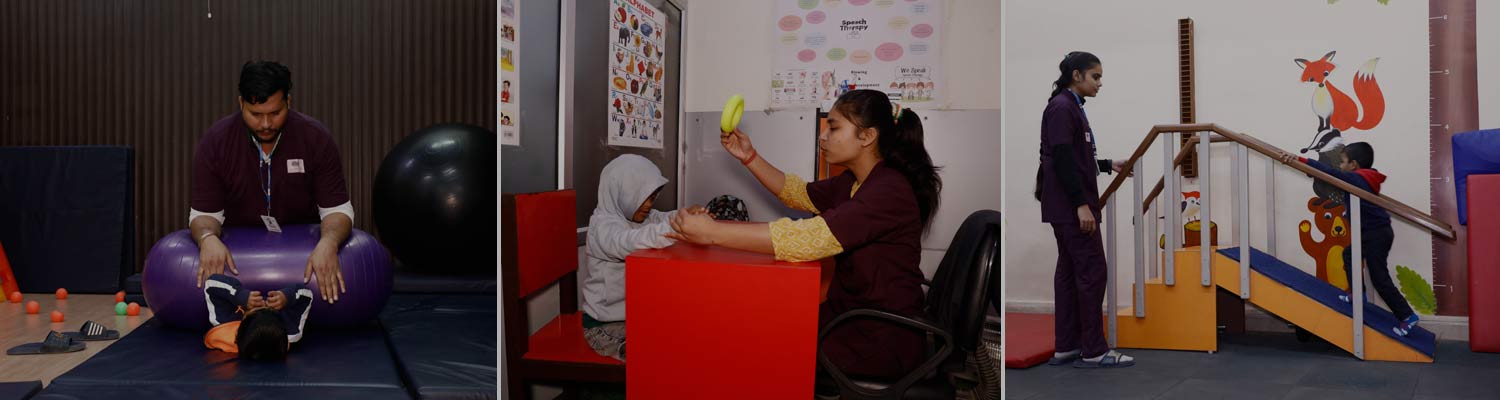
The Physiotherapy Department focuses on improving movement, strength, balance, and physical function to support independence and overall well-being. Through therapeutic exercises, posture training, and functional movement activities, physiotherapy helps individuals recover from injury, manage physical challenges, and build endurance. A key component of physiotherapy includes heavy joint and weight-bearing activities, which provide deep proprioceptive input to improve joint stability, muscle strength, body awareness, and coordination. These activities support better posture, controlled movement, and increased confidence in daily physical tasks across home, school, and community environments.
Our physiotherapists work closely with families, caregivers, and other specialists to develop individualized therapy plans that address each person’s unique challenges and goals. The department focuses on promoting long-term physical health, preventing secondary complications, and improving quality of life. Whether it is helping a child learn to walk confidently, assisting an adult in regaining mobility after injury, or supporting postural stability and endurance, our Physiotherapy Department empowers individuals to move with confidence, independence, and purpose.
The Special Education Department focuses on supporting the learning, development, and overall growth of children with special needs in a structured, inclusive, and nurturing environment. Our program is designed to address individual learning styles and abilities while promoting academic skills, communication, social interaction, and independence. Through individualized education plans (IEPs), structured teaching methods, and multisensory learning approaches, we help children achieve meaningful progress at their own pace.
Our special educators work on foundational academic skills such as attention, pre-academic concepts, reading readiness, writing readiness, numeracy, and functional academics, along with communication, social skills, and classroom behaviors. Learning activities are adapted to meet each child’s cognitive, emotional, and developmental needs, ensuring active participation and positive learning experiences.
The department emphasizes functional learning, helping children apply academic concepts to real-life situations. Visual supports, hands-on materials, routine-based teaching, and positive reinforcement are used to enhance understanding, retention, and independence. Special education sessions also focus on building social skills, emotional regulation, self-confidence, and problem-solving abilities, preparing children for school integration and daily life challenges.
We work closely with parents, therapists, and other professionals to ensure a collaborative and consistent approach to learning and development. Our goal is to empower children with the skills, confidence, and support they need to become active, capable participants in their educational journey and everyday life.