

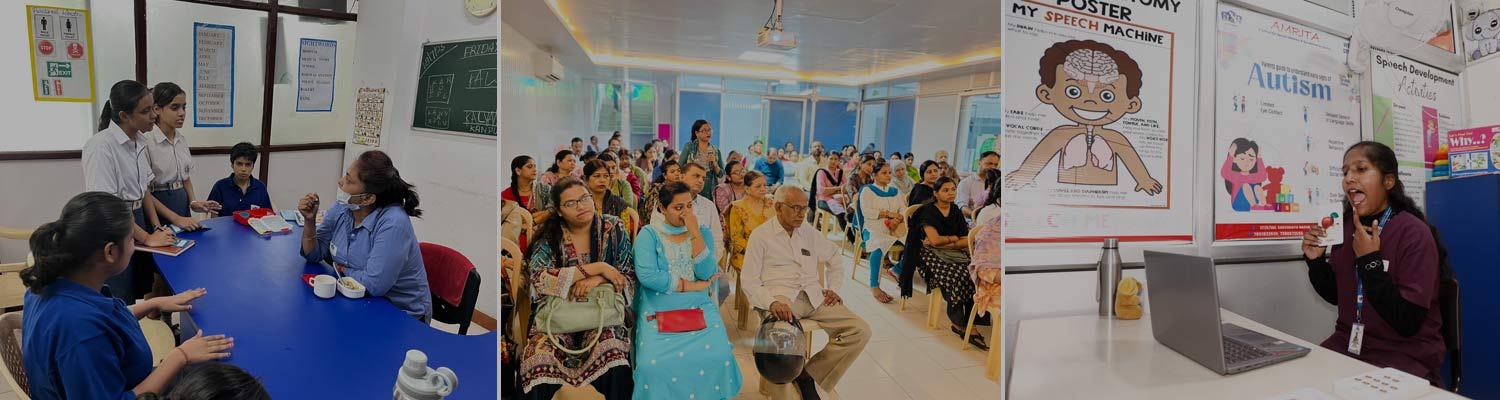
Amrita Rehabilitation Centre offers structured Internship and Training Programs for students who are passionate about psychology, rehabilitation, and working with individuals with special needs. Our programs are designed to bridge theory and practice while nurturing professional skills, ethical sensitivity, and emotional awareness.
Our Clinical Observer ship and Training Program is designed for students pursuing psychology, rehabilitation sciences, special education, social work, or allied health fields. The program provides hands-on exposure to multidisciplinary rehabilitation practices and real-world clinical settings.
Workshops designed for teachers, parents, and caregivers working with children with special needs and neurodevelopmental conditions. The program focuses on building understanding, practical skills, and confidence to support children in everyday settings with sensitivity and care.
The workshops address areas such as toilet training, activities of daily living (ADLs), personal care, sexual hygiene, caregiver burnout, and awareness of autism, other neuro-cognitive disorders, and syndromes. The aim is to help adults respond to children’s needs in a structured, respectful, and developmentally appropriate manner.
A) Awareness Workshops
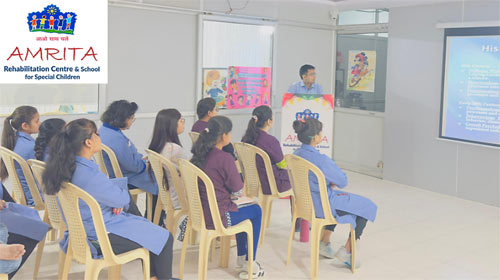
These interactive sessions are designed to build basic understanding of autism and other neurodevelopmental conditions. Participants learn to recognize early signs, understand child behaviour, and gain simple, practical strategies that can be used at home, school, or care settings.
B) Skill Training & Individualized Guidance
This structured program involves observation and guidance by trained professionals, including RCI-certified professionals. Participants receive hands-on skill training and individualized support plans tailored to the child’s needs, daily routines, and learning environment, ensuring continuity of care beyond the program.
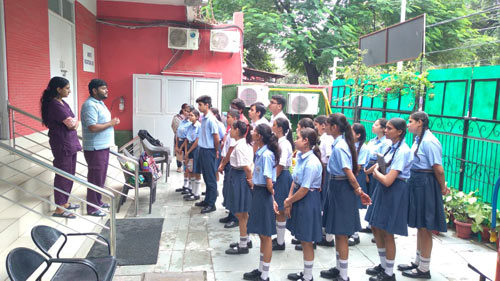
Our Observation Program offers high school students a guided and age-appropriate introduction to the field of rehabilitation and mental health. The program aims to build awareness, empathy, and foundational interpersonal skills.
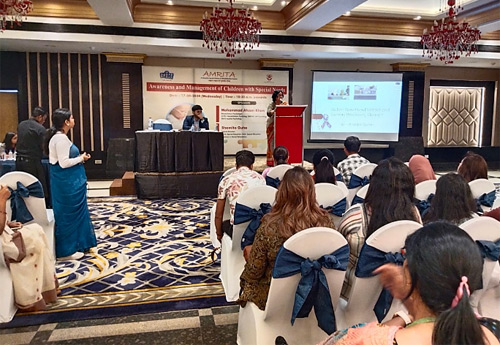
Parent training at Amrita is a structured process designed to empower caregivers with the skills and confidence needed to support a patient's recovery at home. It shifts the caregiver's role from a passive observer to an active member of the rehabilitation team, ensuring that therapy techniques are reinforced consistently beyond the clinical setting.
Rehabilitation centres typically use a mix of theoretical and hands-on approaches:
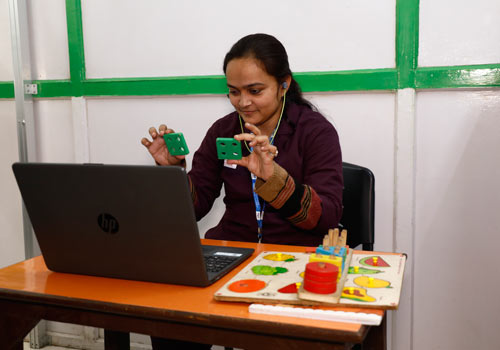
Bringing expert care directly to your home, Amrita’s Online Sessions bridge the gap between clinical excellence and the comfort of your personal environment. Recognizing that consistency is the key to progress, our virtual platform is designed to provide high-quality, interactive, and evidence-based therapy for those who cannot visit our centers in person.
We offer a comprehensive suite of tele-therapy services:
Specialized virtual sessions focusing on articulation, language development, and fluency, using engaging digital tools to keep learners of all ages motivated.
Guided home-based activities designed to improve fine motor skills, sensory processing, and activities of daily living (ADL) through real-time coaching for caregivers and students.
Individualized Education Plans (IEPs) delivered via interactive sessions that target academic gaps, cognitive development, and functional literacy.
Expert-led physical rehabilitation and exercise programs monitored via high-definition video to ensure correct posture, movement patterns, and muscle strengthening.